Middle East
Middle Eastern geopolitics is characterised by overlapping rivalries, energy flows, and external power engagement. Iran's network of regional partners, Gulf state diversification strategies, and the enduring centrality of the Israel-Palestine conflict shape the security landscape. At the same time, maritime routes through the Strait of Hormuz and Bab el-Mandeb link regional stability to global energy markets and trade. This section examines proxy competition, defence cooperation, and the geopolitical implications of economic reform initiatives across the Gulf. It also tracks the evolving role of external actors, including the United States, Russia, China, and European states, in security and infrastructure projects. Through integrated mapping and analysis, the hub highlights how local conflicts intersect with broader strategic competition.
Maps & Infographics on Middle East
View all maps & infographics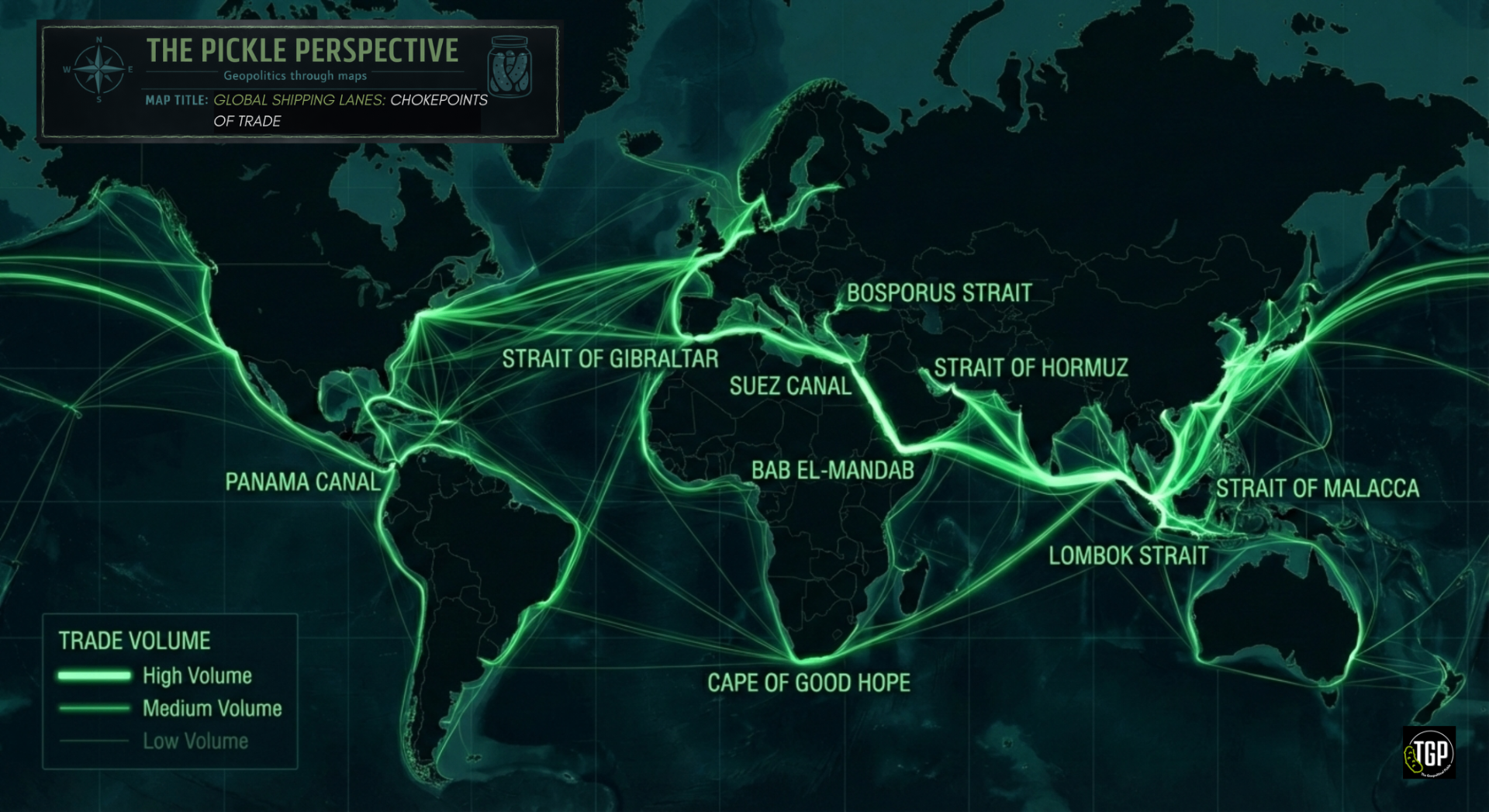
Global Shipping Lanes: Chokepoints of Trade
Around 80–90% of global trade by volume is transported by sea, making maritime routes the backbone of the global economy.
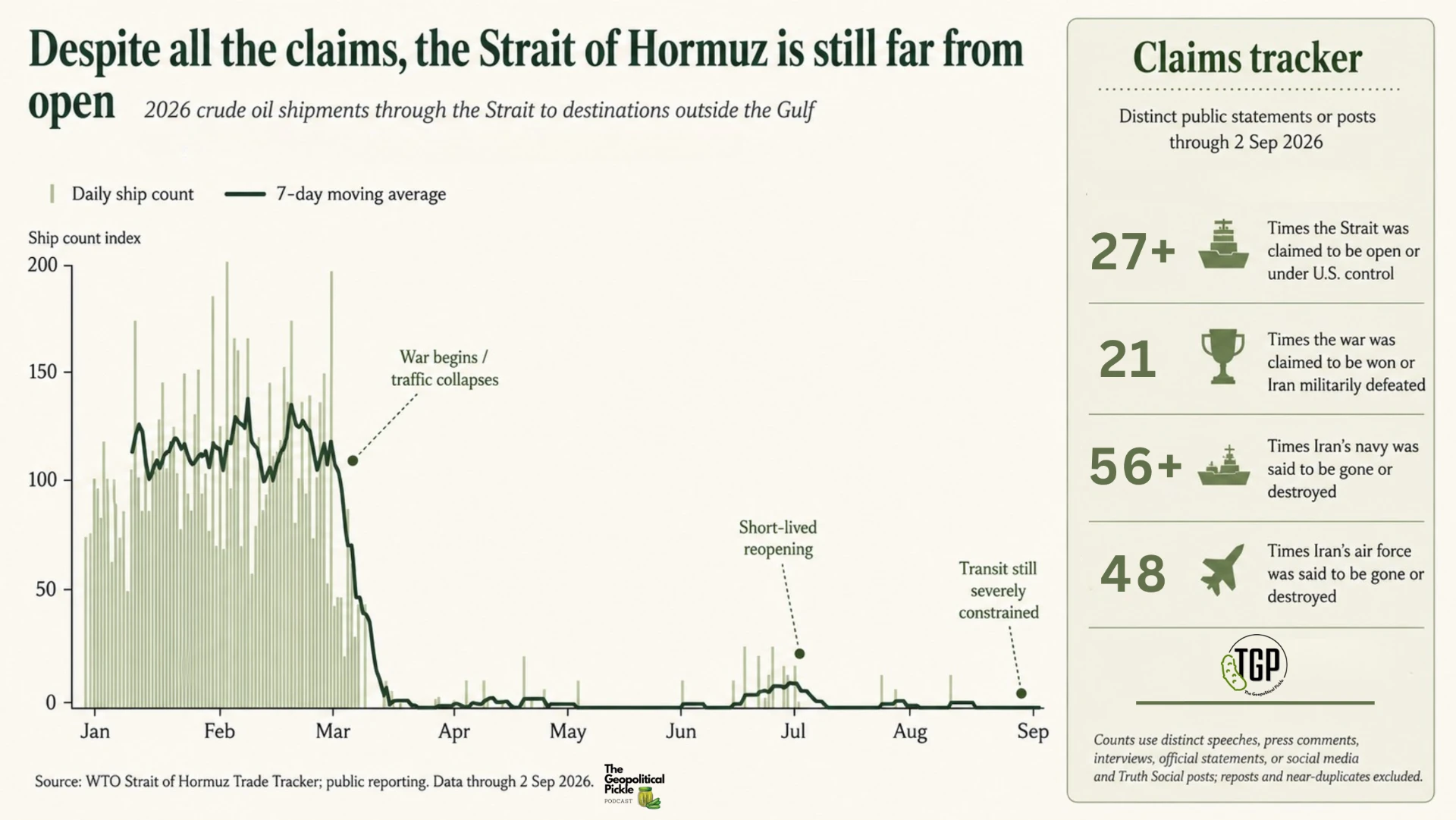
Trump’s Hormuz Narrative Clashes with Reality
White House claims of victory and control over the Strait of Hormuz diverge sharply from shipping data showing that commercial transit remains severely constrained.