Europe
European geopolitics is increasingly defined by the interaction between security integration, energy transition, and renewed great-power competition. Russia's war in Ukraine has accelerated the need for strategic autonomy, reshaped defence planning, and exposed structural dependencies in energy and industrial supply chains. Debates over EU defence industrial capacity reflect a broader effort to adapt to a more contested international environment. This section examines military posture, alliance cohesion, and the geopolitical implications of economic policy, including critical raw materials, infrastructure investment, and technological competition. Particular attention is given to the role of Eastern Europe as a frontline security space and to the evolving relationship between European institutions and external actors. Through maps, data analysis, and thematic briefings, this hub situates Europe within the wider context of transatlantic strategy and global power realignment.
Maps & Infographics on Europe
View all maps & infographics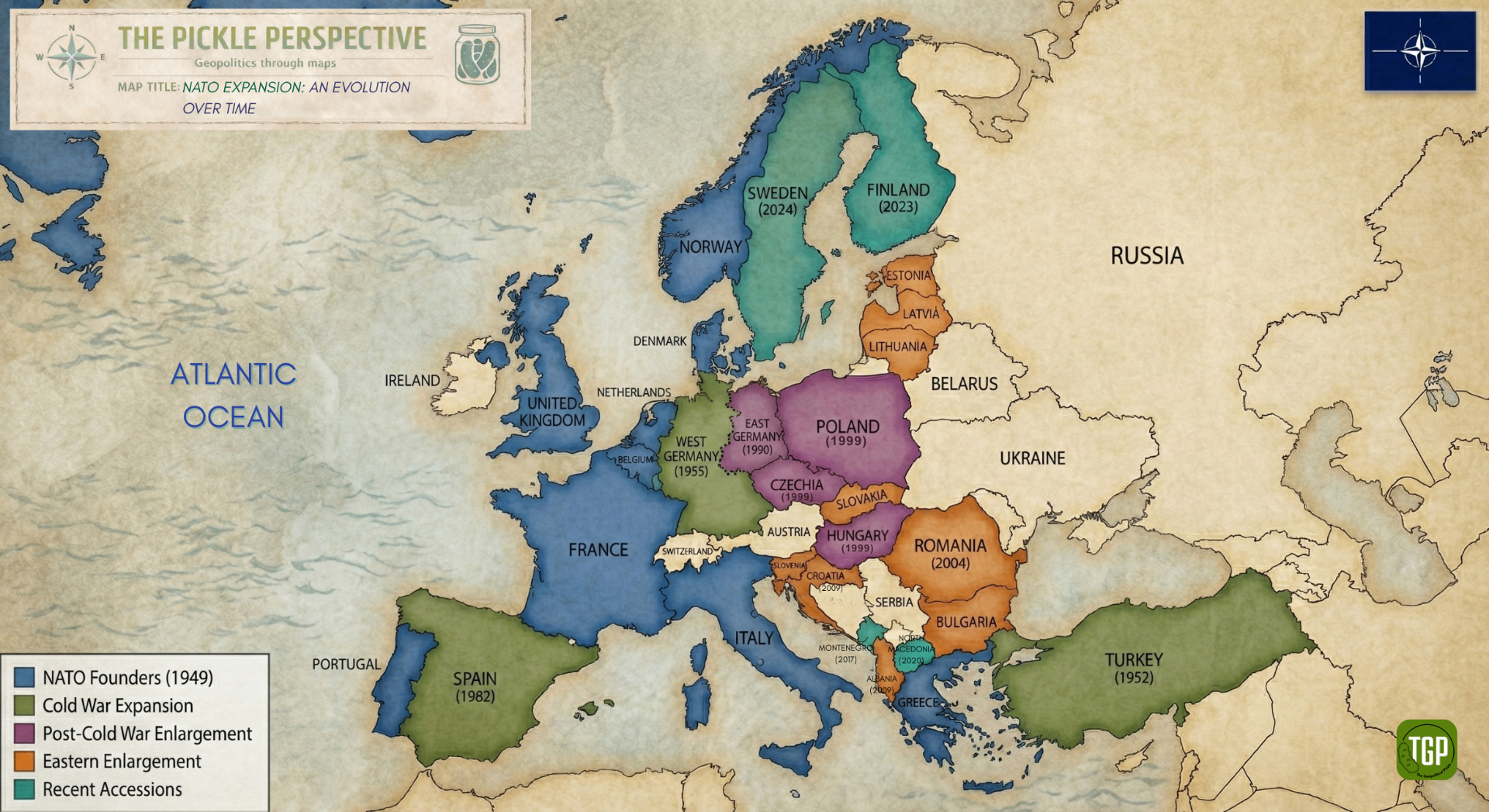
NATO Expansion: An Evolution Over Time
NATO's security perimeter has shifted eastward through successive waves of enlargement, reshaping the military geography of Europe.
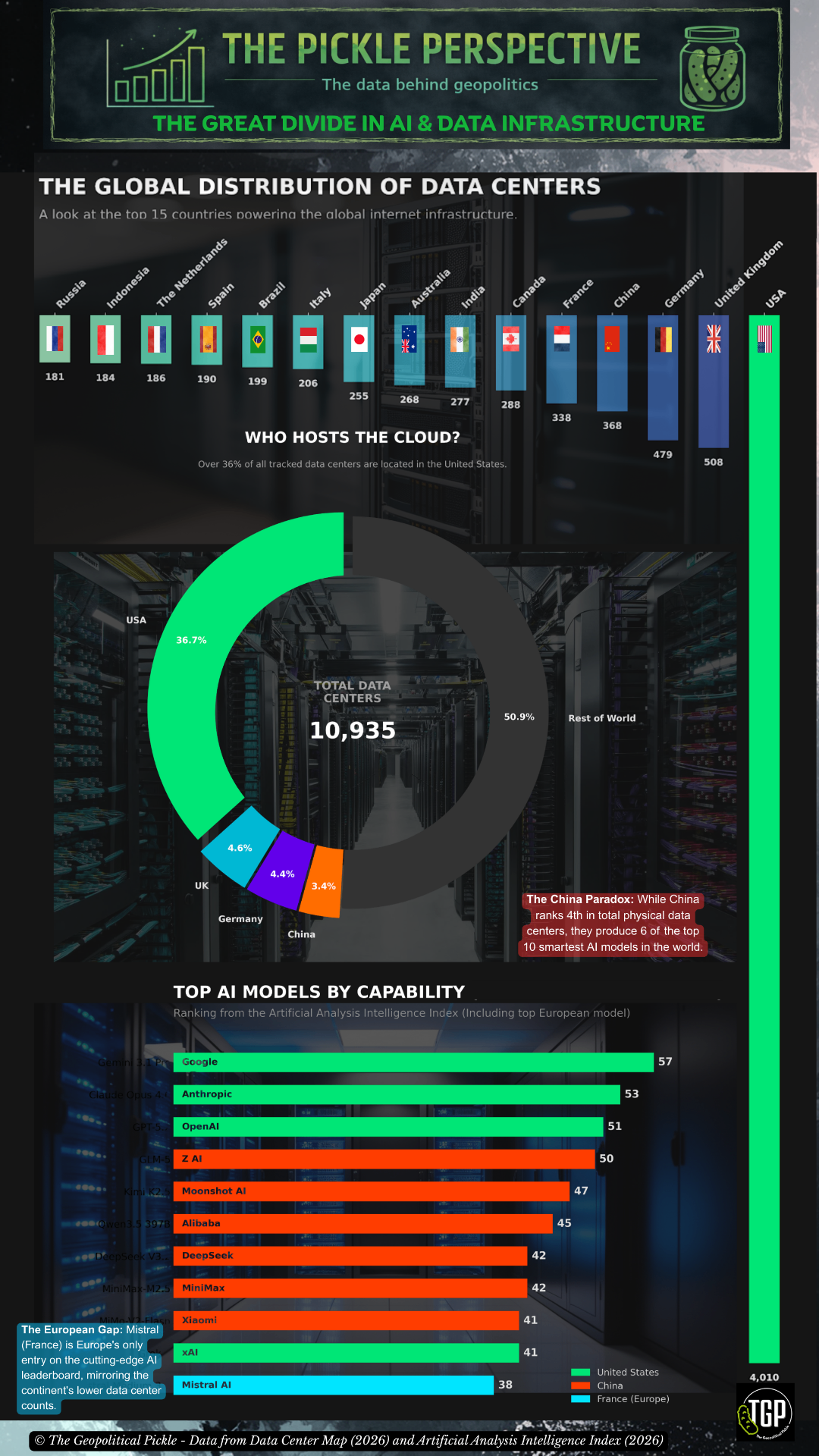
The Great Divide in AI & Infrastructure
The emerging contest over artificial intelligence reveals a pronounced asymmetry in the physical infrastructure that underpins advanced AI systems.
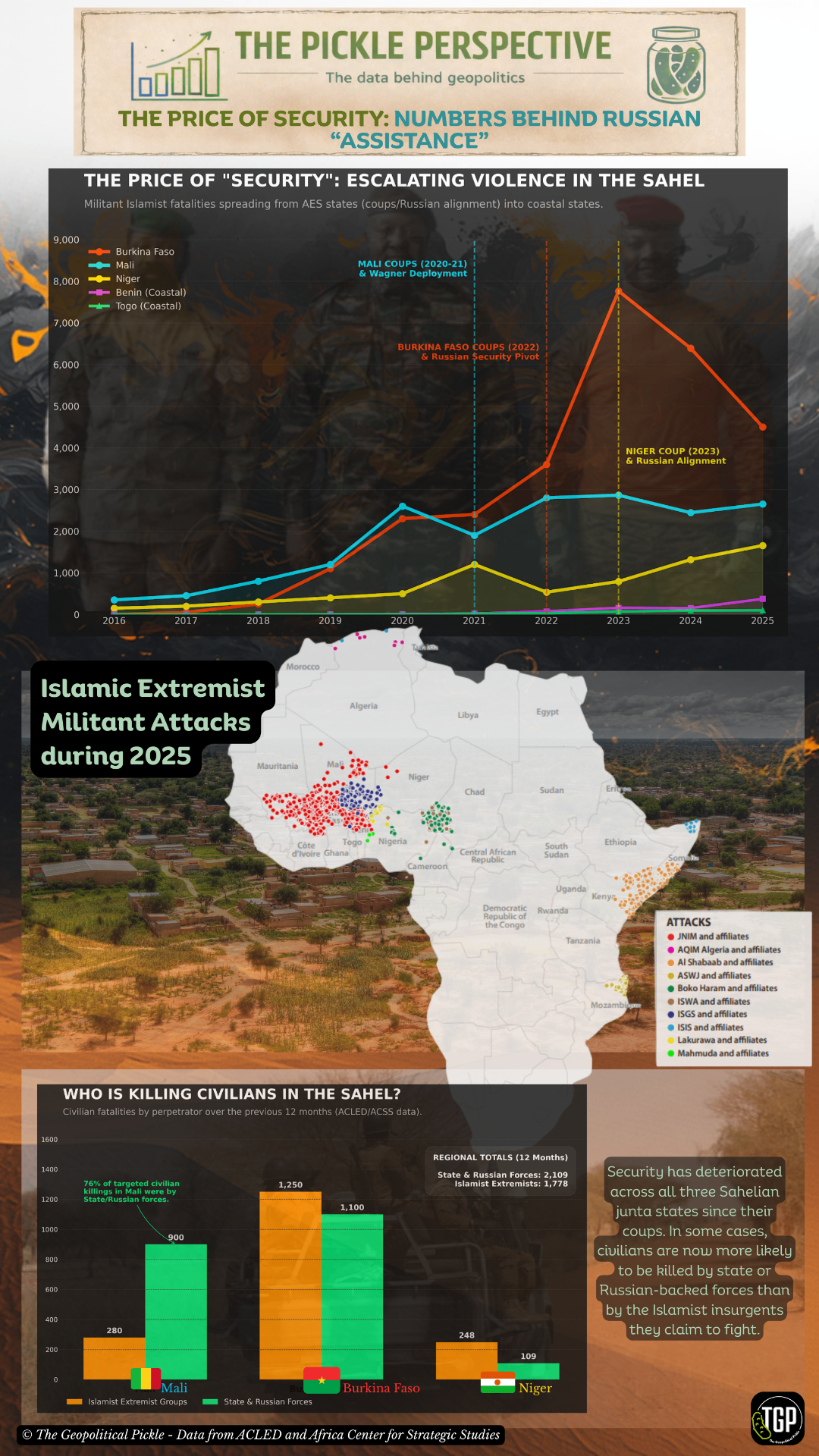
The Price of Security: Numbers Behind Russian "Assistance"
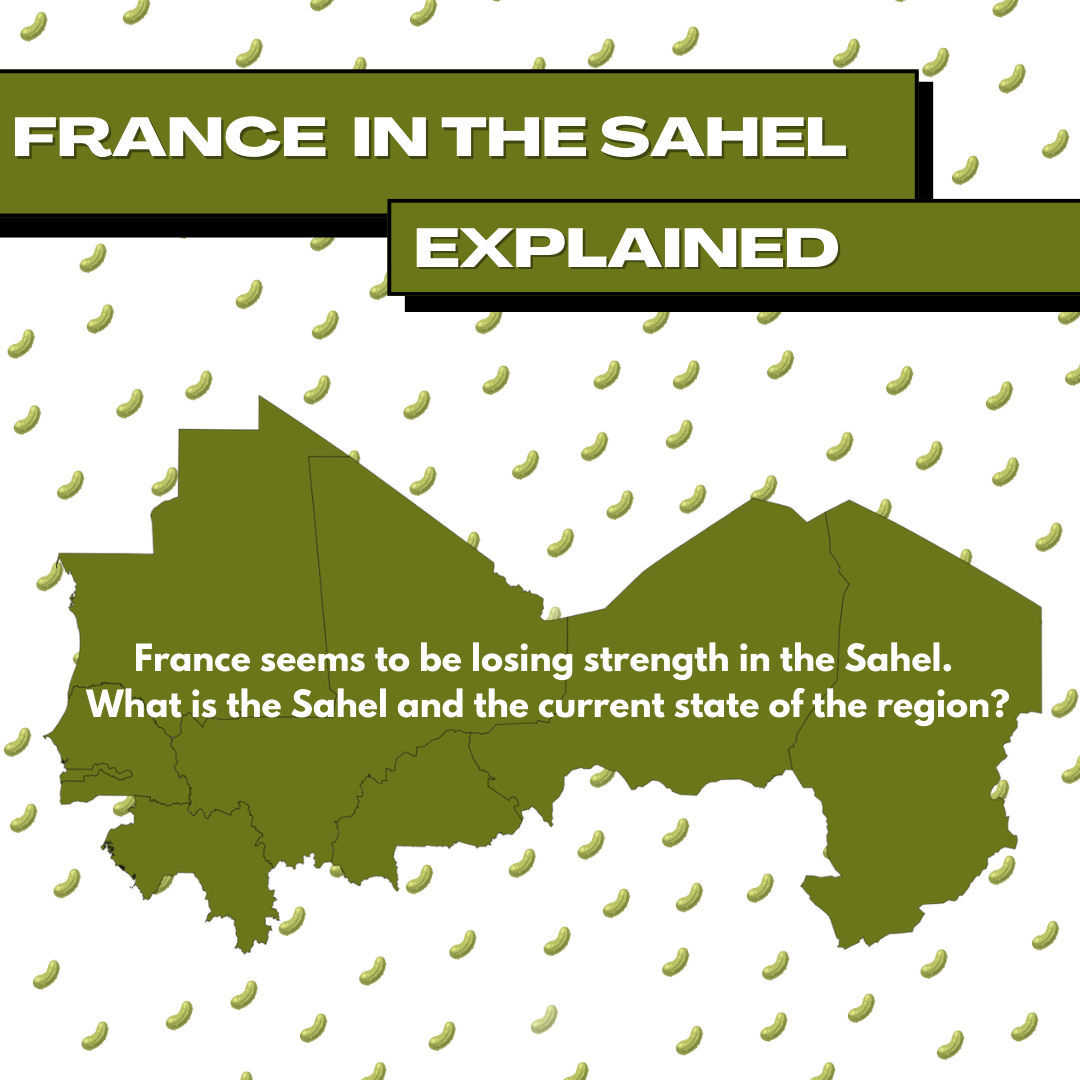
A wave of military coups across the Sahel since 2020 has dramatically reshaped the region's security landscape, with data suggesting these shifts have not produced the promised stability.
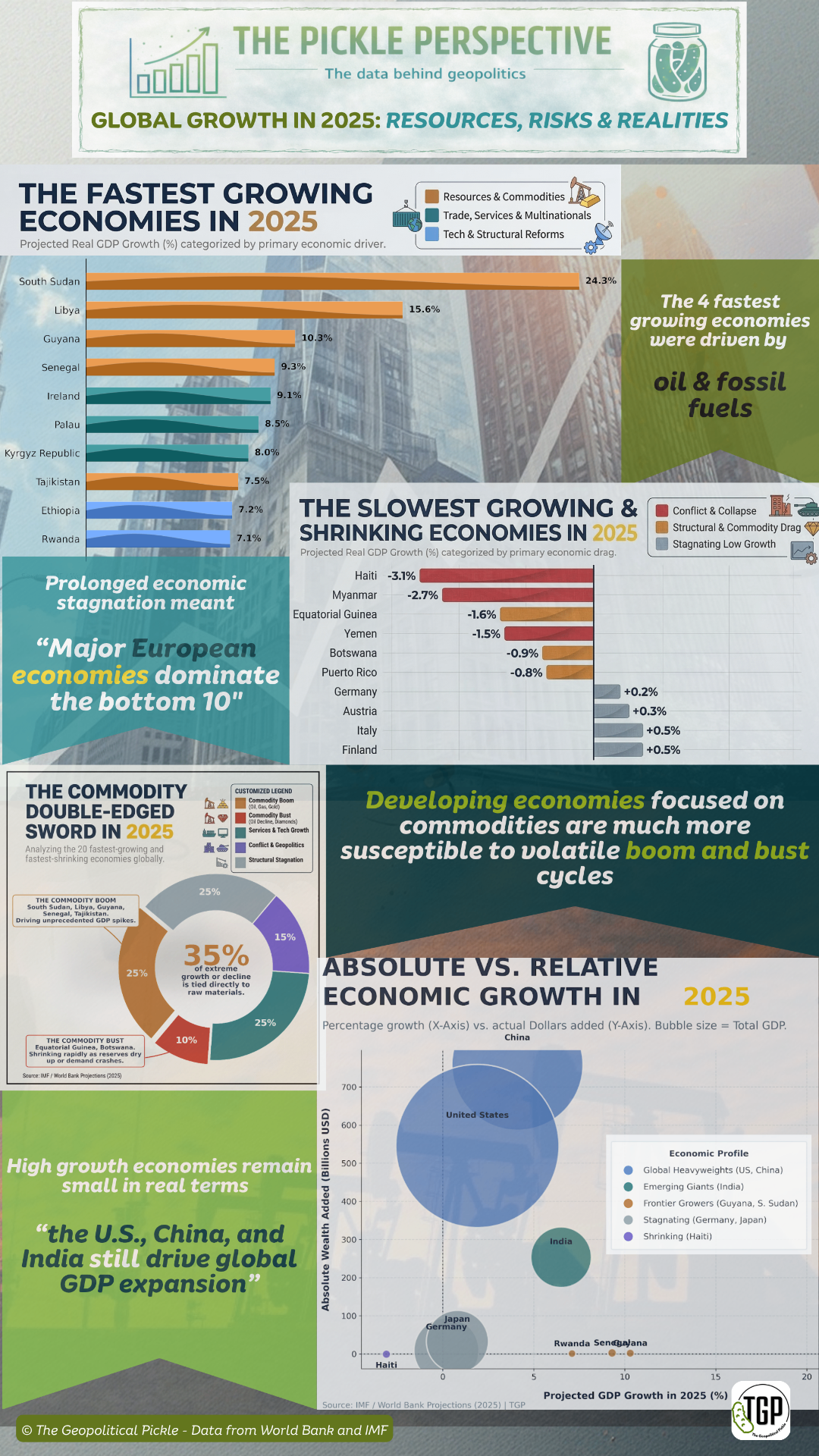
Growth, Resources, and Structural Divergence in 2025
The global economic landscape in 2025 reveals a stark divide: resource-rich frontier economies surge while major European powers stagnate, exposing the commodity double-edged sword at the heart of development.