Click image to enlarge
The Price of Security: Numbers Behind Russian "Assistance"
Security Partnerships and Escalating Violence in the Sahel
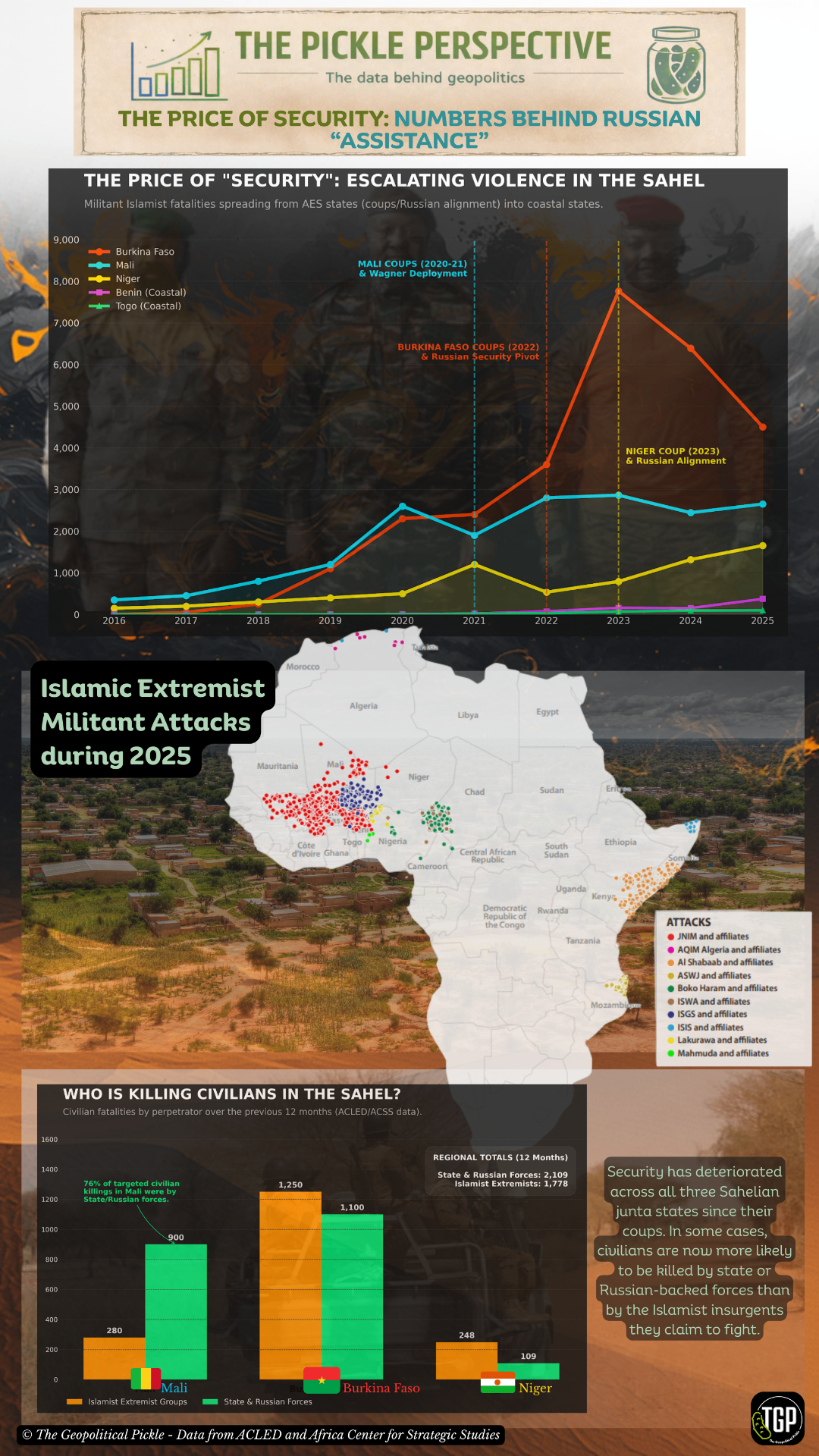
Explore the Data ↓A wave of military coups across the Sahel since 2020 has dramatically reshaped the region's security landscape. In Mali, Burkina Faso, and Niger, juntas seized power while blaming previous civilian governments for failing to contain Islamist insurgencies. In the aftermath, these regimes expelled Western military missions and security partnerships, instead turning toward Russian state support and private military contractors for assistance.
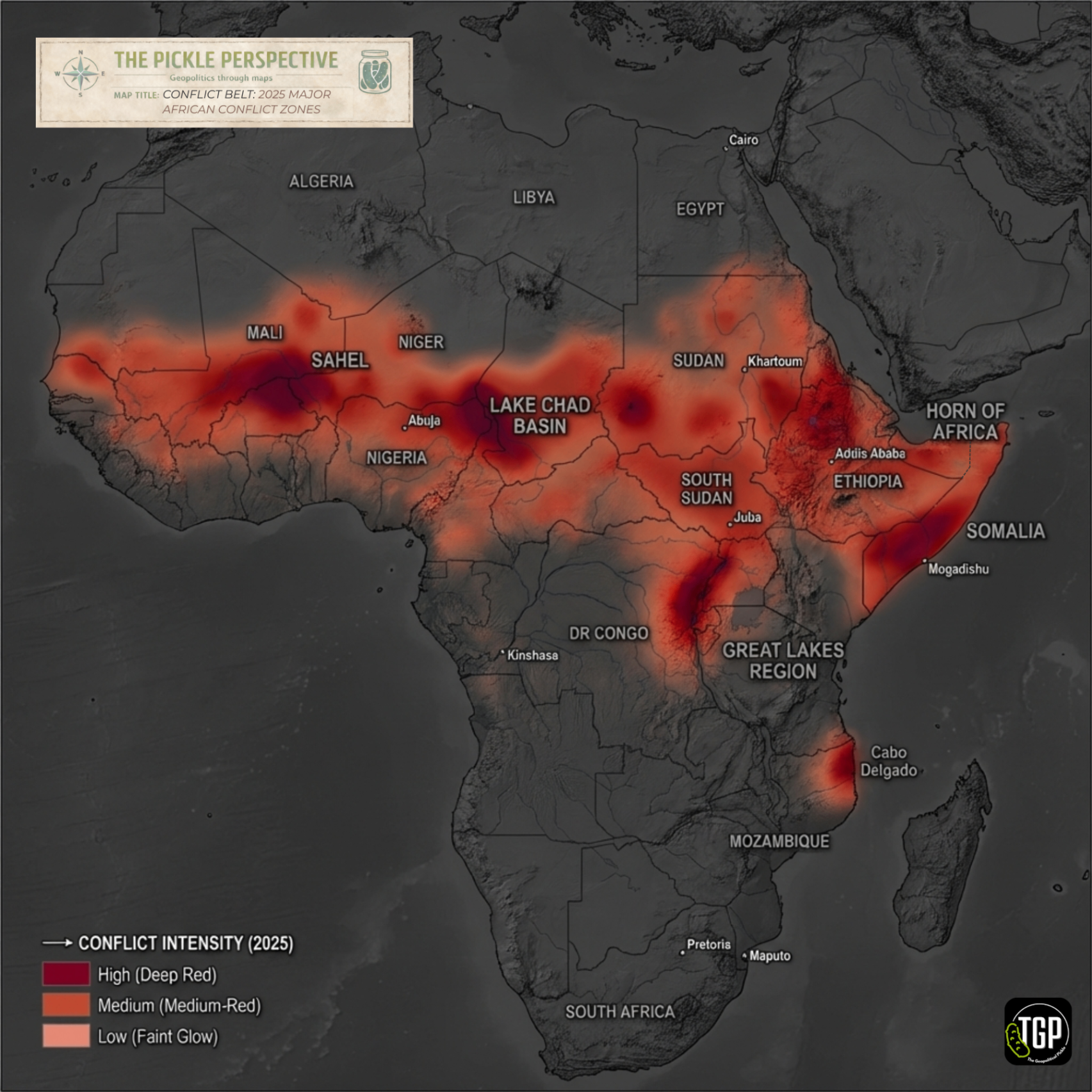
The data suggests that these shifts have not produced the promised stability. Across all three states, levels of violence linked to militant Islamist groups have continued to rise following the coups. In Burkina Faso in particular, militant fatalities have surged sharply since the government's strategic pivot away from Western security cooperation.
At the same time, civilian harm has become an increasingly prominent feature of the conflict. Reporting from ACLED and the Africa Center for Strategic Studies indicates that state forces and Russian-linked security actors have been responsible for a significant share of civilian killings in recent years—sometimes exceeding those attributed to Islamist extremist groups themselves.
Rather than reversing instability, the Sahel's new security alignment appears to have coincided with a broader deterioration of the regional security environment. Violence has expanded geographically while civilian populations remain caught between insurgents and increasingly aggressive counterinsurgency campaigns.
Data: ACLED (2025); Africa Center for Strategic Studies; author visualisation.
The Pickle Perspective — Geopolitics through maps and data.