Click image to enlarge
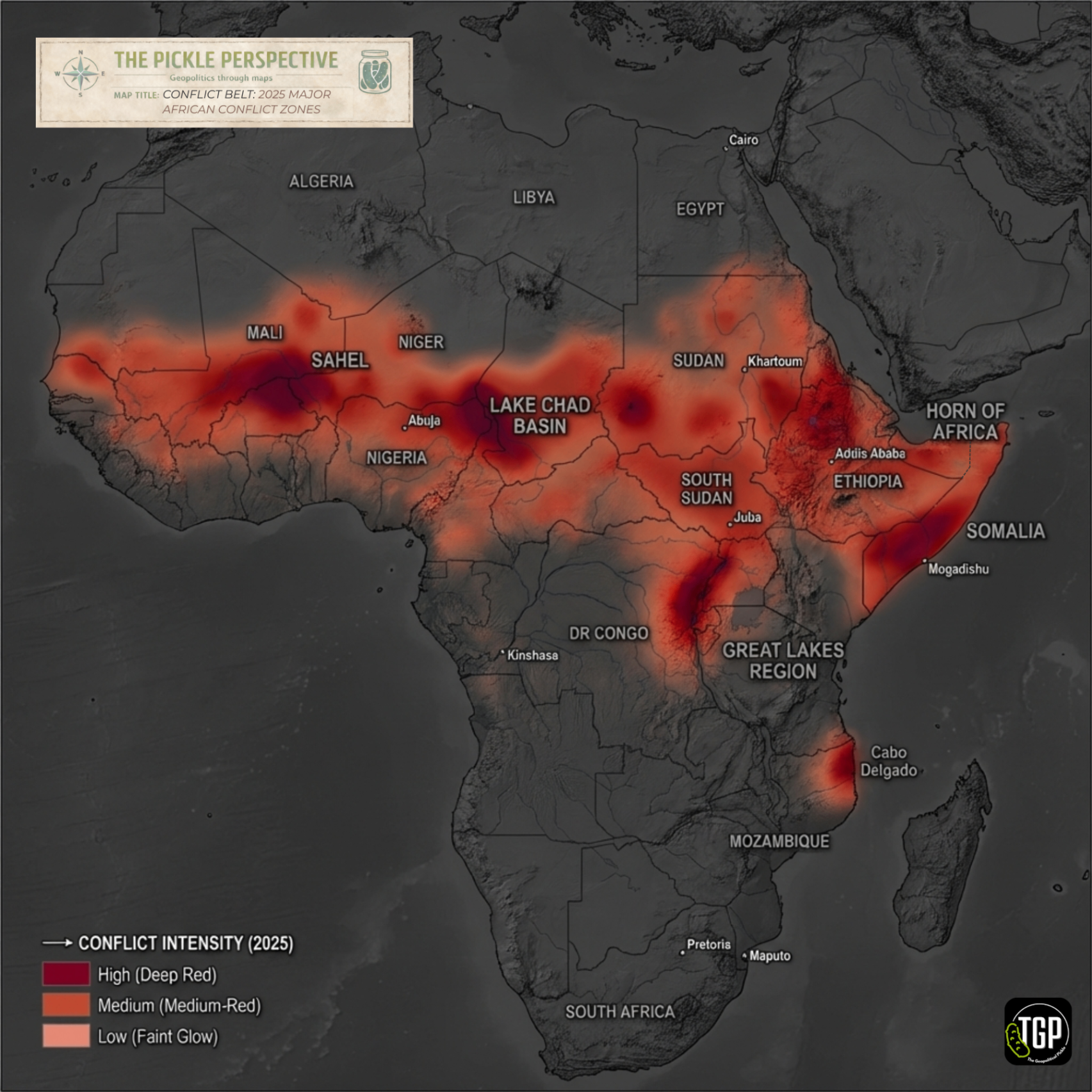
Conflict Belt: 2025 Major African Conflict Zones
Conflict Epicentres and Resource Geography in Africa
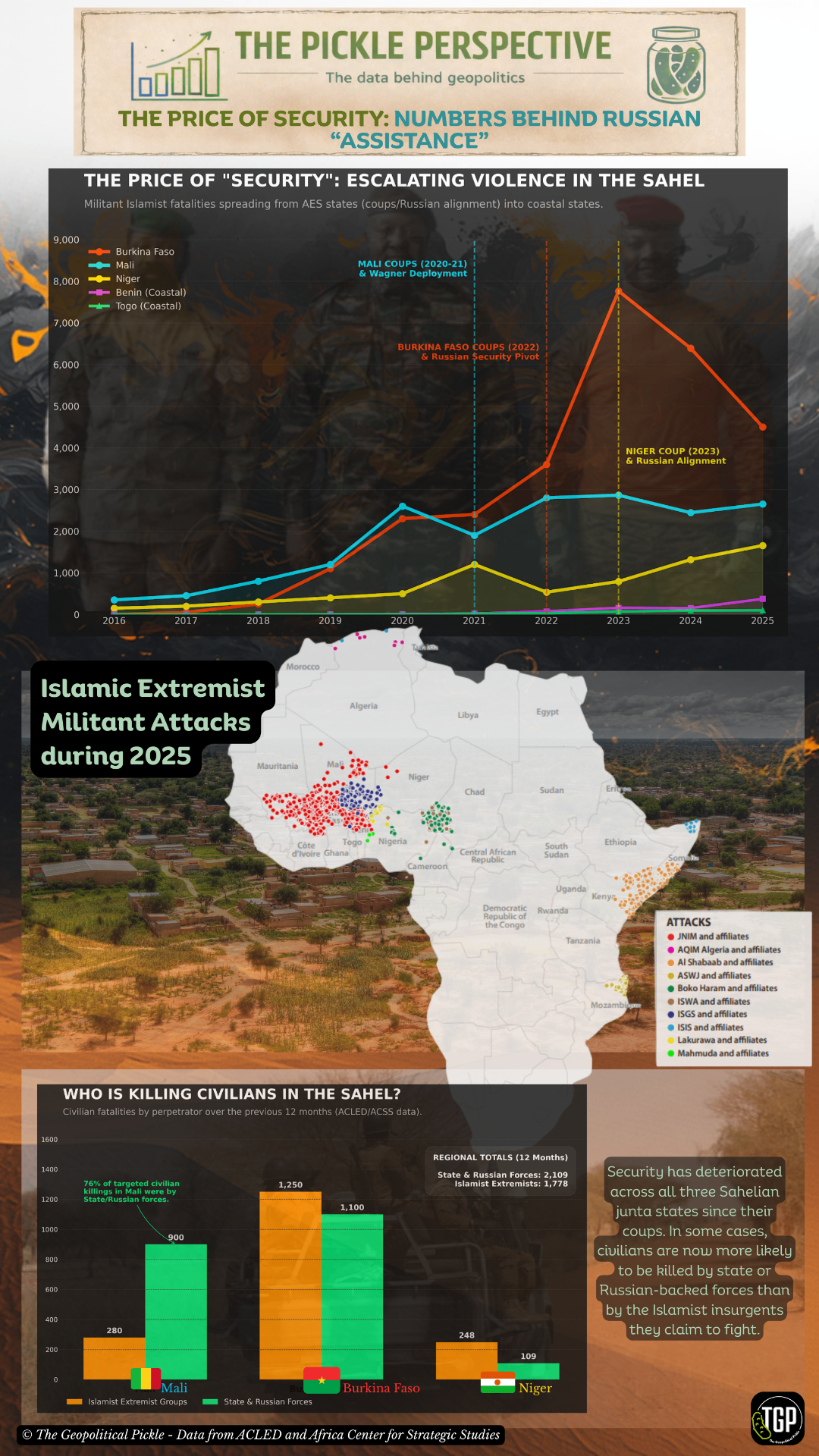
Patterns of political violence across Africa are not randomly distributed. Instead, they cluster in a series of identifiable epicentres that combine weak state control, transnational armed groups, and economically strategic territory.
The eastern Democratic Republic of Congo remains one of the most persistent conflict zones, where competition over mineral-rich areas intersects with militia activity and cross-border dynamics. In northern Mozambique, insurgent violence has concentrated around gas-producing regions, underscoring the vulnerability of emerging energy frontiers. Somalia continues to experience entrenched insurgency, with violence concentrated in areas where governance capacity is limited but strategically important corridors are contested.
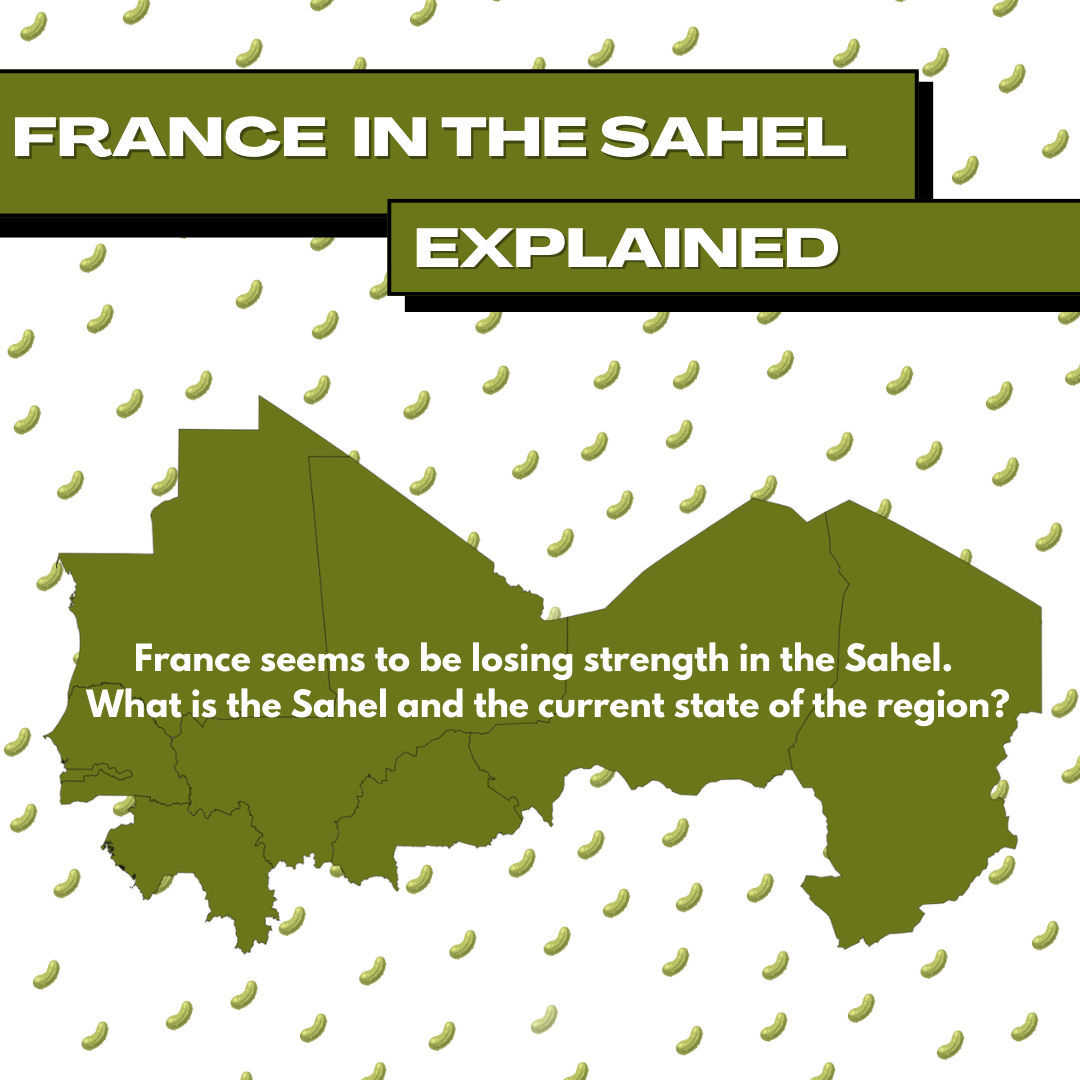
In Sudan, conflict has increasingly overlapped with gold-producing regions, where control of extraction and revenue streams provides both motive and means for armed actors. Across the Sahel, a belt of military coups and expanding jihadist activity stretches from Mali through Burkina Faso to Niger, reflecting the interaction of governance breakdown, regional spillover, and insurgent mobility across porous borders.
Taken together, these hotspots illustrate a broader structural pattern: violence is most intense where state authority is weakest but economic or strategic value is highest. The geography of conflict in Africa therefore mirrors the geography of resources, transit routes, and political fragility rather than national boundaries alone.
Data: ACLED (2025), Critical Threats Project, and open-source conflict event datasets.
The Pickle Perspective — Geopolitics through maps and data.