Maritime Strategy
Examine how naval power, chokepoints, and maritime infrastructure shape global trade and security competition across the world's oceans.
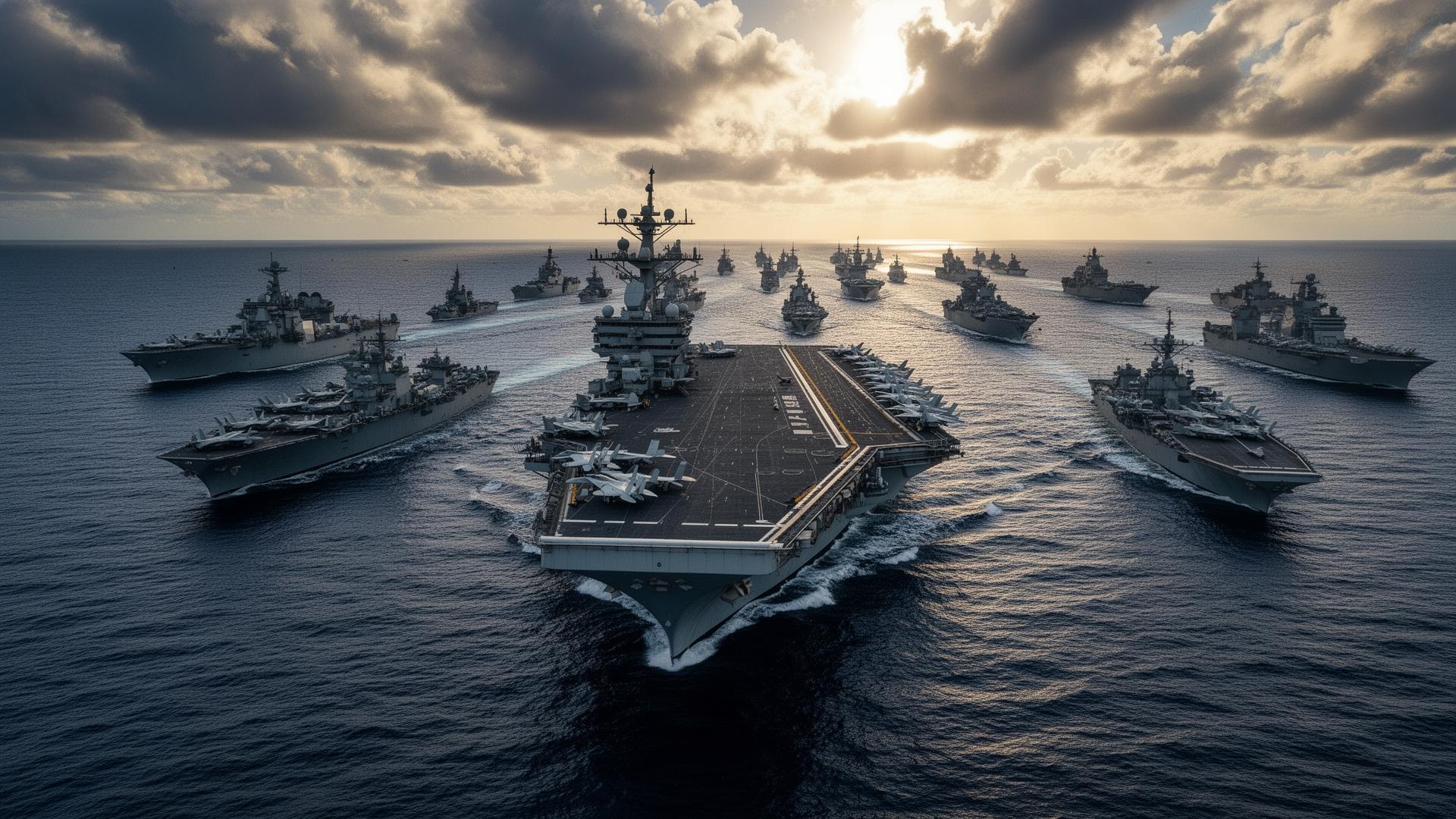
Control of the world's oceans remains central to geopolitical power. Maritime strategy focuses on sea lines of communication, naval capabilities, and key chokepoints that enable or constrain global trade and military movement. Regions such as the South China Sea, the Red Sea, and the Arctic are increasingly important arenas where economic interests and security concerns intersect. This theme examines naval expansion, port development, maritime infrastructure, and the strategic implications of shifting shipping routes. By analysing maritime geography alongside political and military developments, it highlights how control of the seas continues to shape global power dynamics.
Maps & Infographics on Maritime Strategy
View all maps & infographics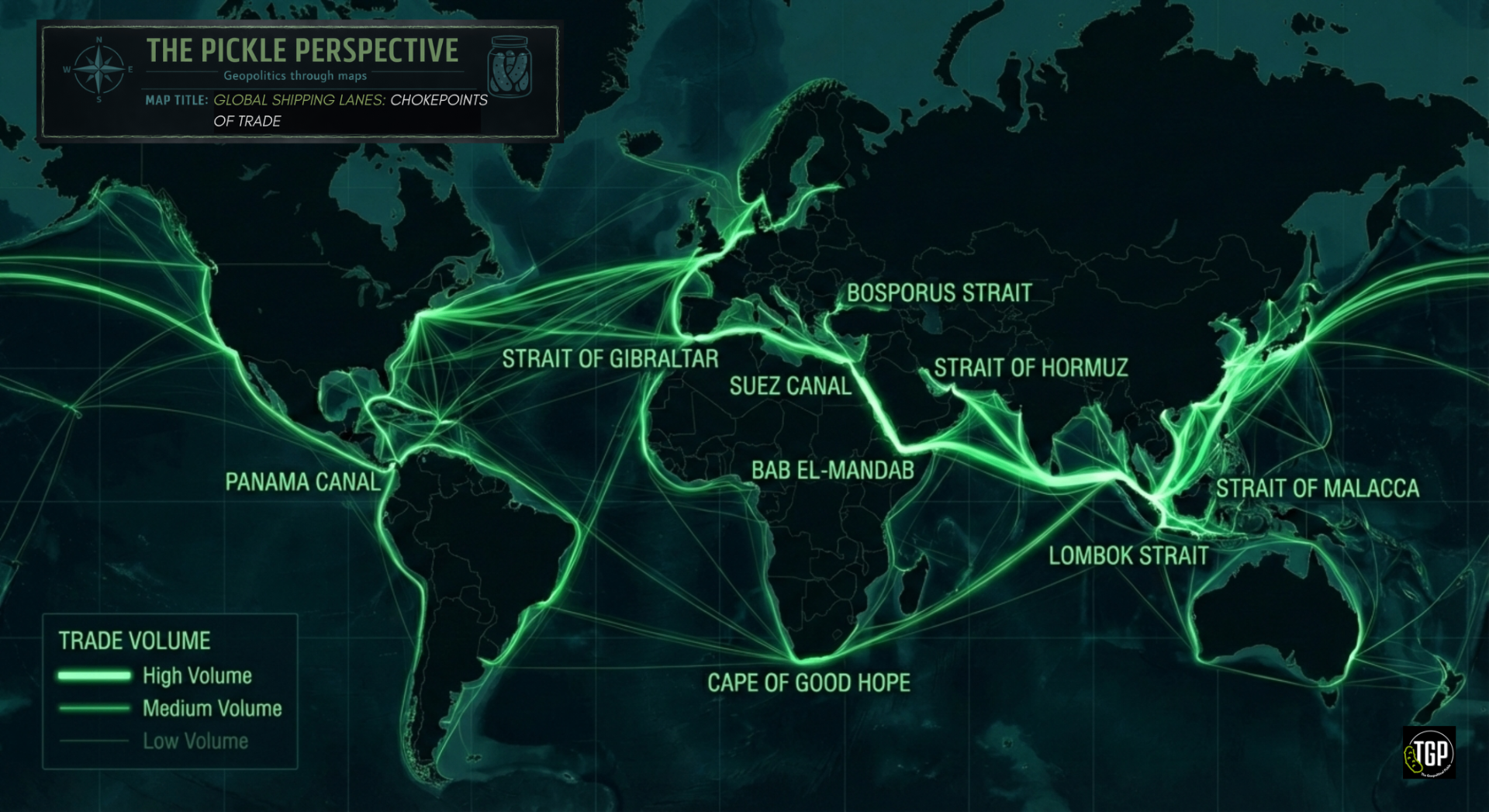
Global Shipping Lanes: Chokepoints of Trade
Around 80–90% of global trade by volume is transported by sea, making maritime routes the backbone of the global economy.
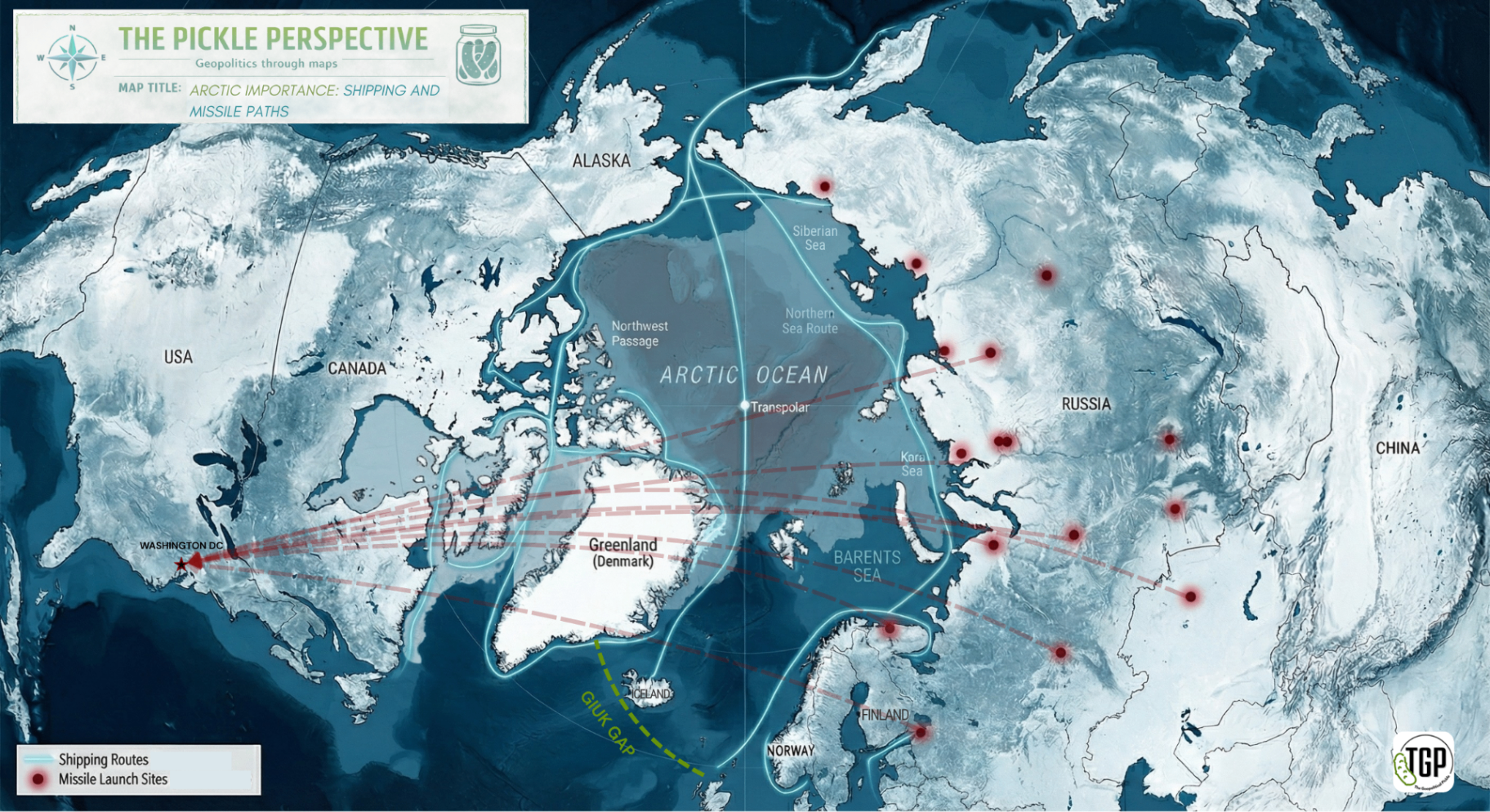
Arctic Importance: Shipping and Missile Paths
The Arctic is becoming increasingly geopolitically relevant as climate change reduces sea-ice extent and extends seasonal navigability.
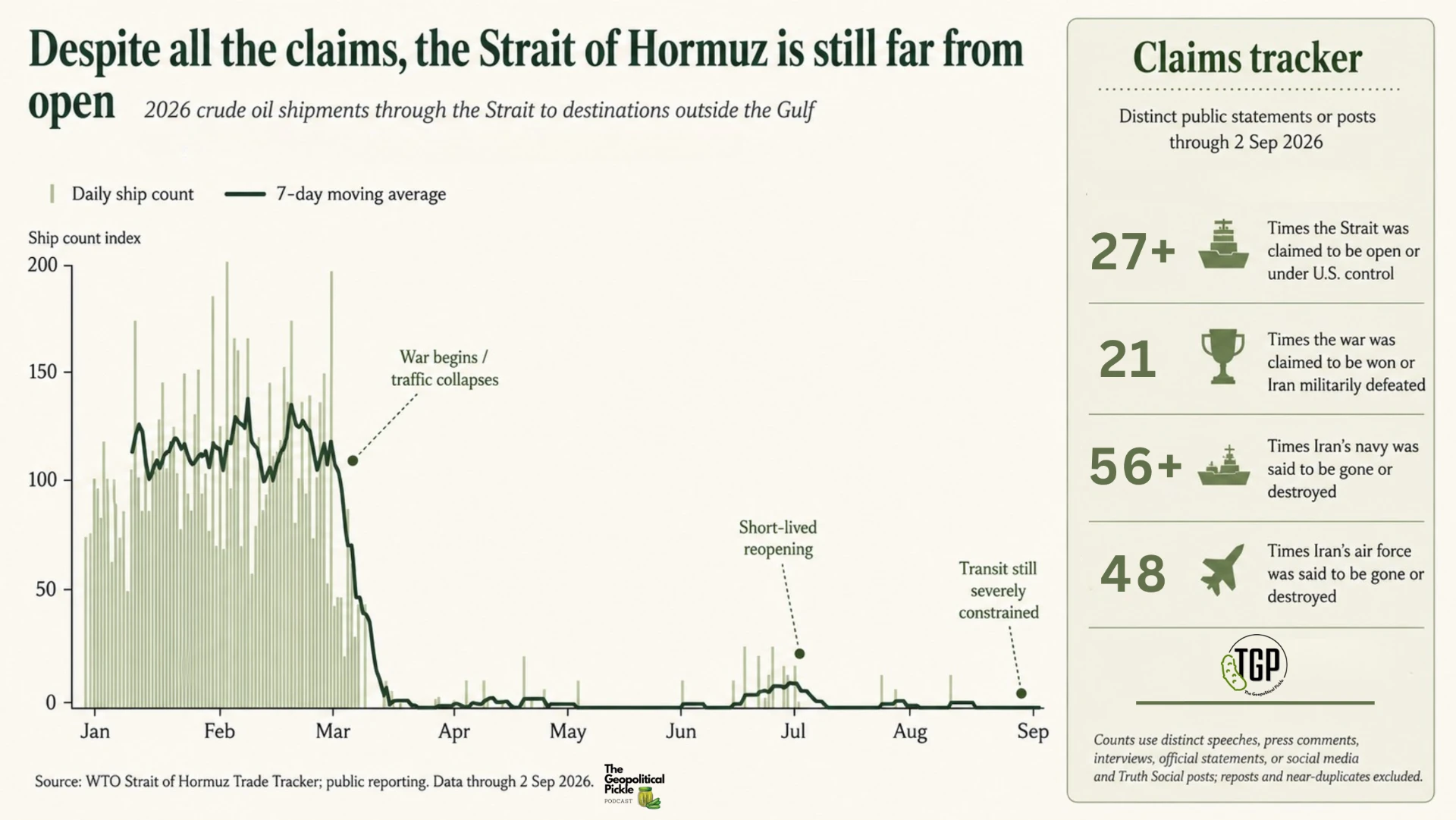
Trump’s Hormuz Narrative Clashes with Reality
White House claims of victory and control over the Strait of Hormuz diverge sharply from shipping data showing that commercial transit remains severely constrained.
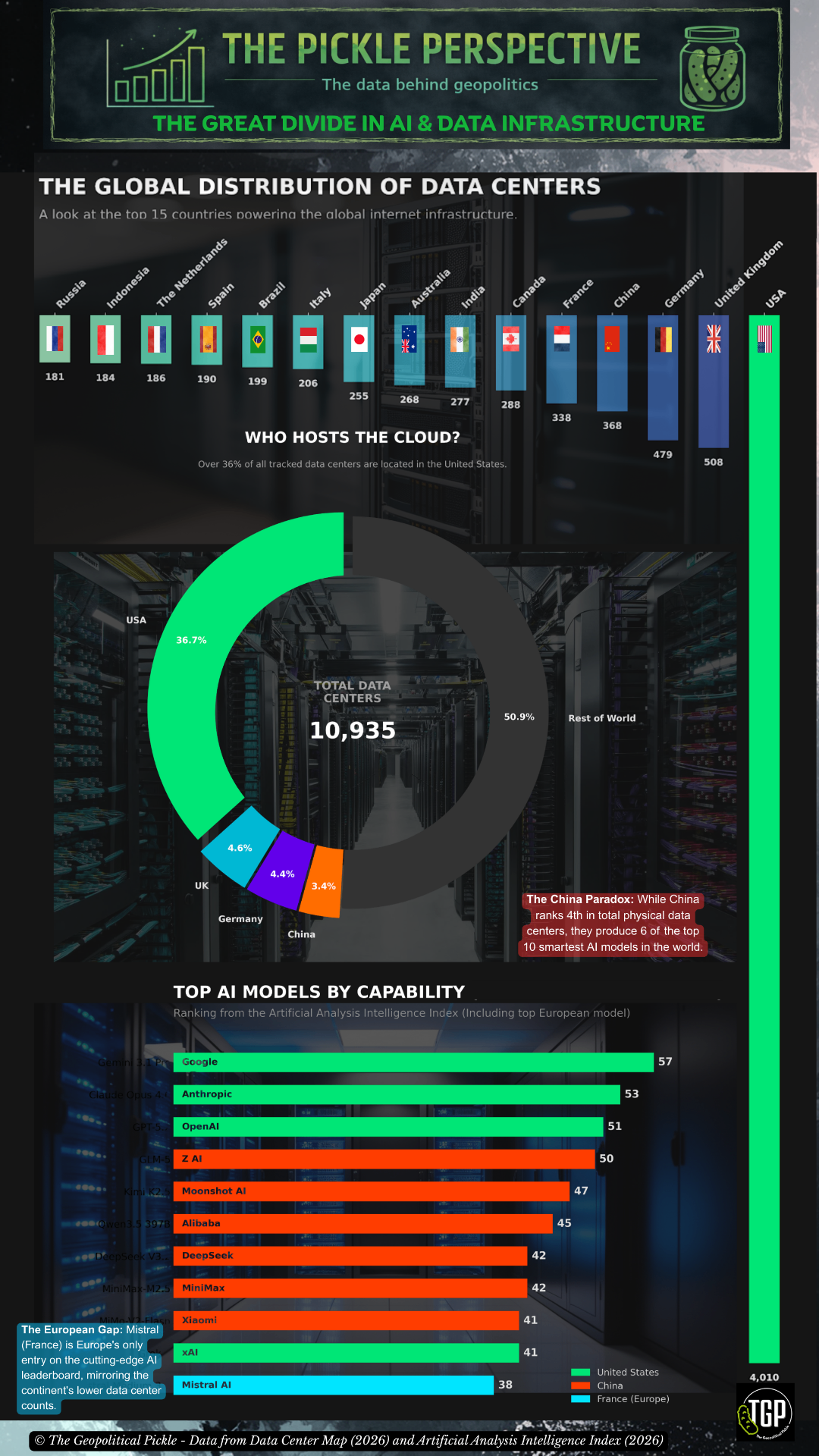
The Great Divide in AI & Infrastructure
The emerging contest over artificial intelligence reveals a pronounced asymmetry in the physical infrastructure that underpins advanced AI systems.